Making Peace with the Present — and Enjoying It Now

Estimated read time: 4 minutes

As we come to the end of 2025, that week of limbo between Christmas and New Year’s, I pause and reflect not only on the year nearly past, but on the four (FOUR!?) years since we sold A Butler’s Manor and moved to Connecticut. We are coming to the end of the Year of the Snake in the Chinese Lunar calendar, which asks us to shed what no longer fits, to slow down, to listen beneath what is noise or habit, to understand why change is necessary, and prepare for the momentum of the next lunar Year of the Horse.

Retirement, selling a home of many years, moving to a new area–all of these individually are milestones that require some measure of adaptation, uncertainty, and grief. I’m not sure that I grieve the life I inhabited, but I am learning that within that life, there were things that no longer serve my present and future self. My quest, then, becomes to address the uncertainty of how I go forward into this new world.

The gift of this new chapter of life is how I’m growing into me — not the version shaped by deadlines or glowing reviews, the version where I turned myself inside out to keep everything tidy and perfect, or worried about the thousand tiny social niceties that once felt necessary. My journey is a road to fully inhabiting my life in the present — not rushing toward something “next,” not trying to cram every moment with productivity, but simply being here, trying to breathe, quietly delighted by small wonders. To experience every day like a gentle unfolding, rather than a race toward completion.

Letting go hasn’t been instantaneous, and it certainly hasn’t been without bumps in the road. I still notice the old reflex to be a people-pleaser — that soft, insistent voice that blurs the line between kindness and self-erasure, between genuine warmth and something you have to perform rather than feel. I see, too, the urge to curate every corner of my space, as though a perfect tableau somehow protects my sense of self. Those habits once served me well — they were part of the toolkit I carried through decades of hospitality, welcoming guests, prepping rooms and meals, and tuning every detail until it was tidy and perfect. In My Words

But I’m learning something subtle yet profound: The world doesn’t require my perfection. My moments of grace come when I stop trying to control every surface, every interaction, every perception. I’m still a creative at heart, but what I’m making now is rooted in presence rather than performance. Unfinished edges, the marks left by daily living, and the sound of laughter lingering in the rooms — these are what make this place feel like home, and feel like us.

We’ve decided that we are no longer postponing dreams until “someday.” For years, in previous homes, we catalogued projects and shelved them with the unspoken agreement that we’d get around to them later, after some milestone, after a season, after… something. Here, we’ve leapt into making this property uniquely ours from the start. We’ve walked rooms and garden paths and said, “yes — this should stay,” or “no — this should become something new.” In the past three years, we’ve repainted the entire interior of the house, dug and planted gardens, added trees, cleared 150’+ of overgrown shrubery to create a full view of the pond, retiled a bathroom, completely remodeled the kitchen, built a butler’s pantry, updated the great room and dining room, insulated and added windows to create a woodworking workshop in the barn, installed a brick patio, and many more smaller projects. We’re not waiting years to instigate the projects that call to us; instead, we’re doing the work we can now because we can now, and because there’s a fundamental joy in doing. In My Words
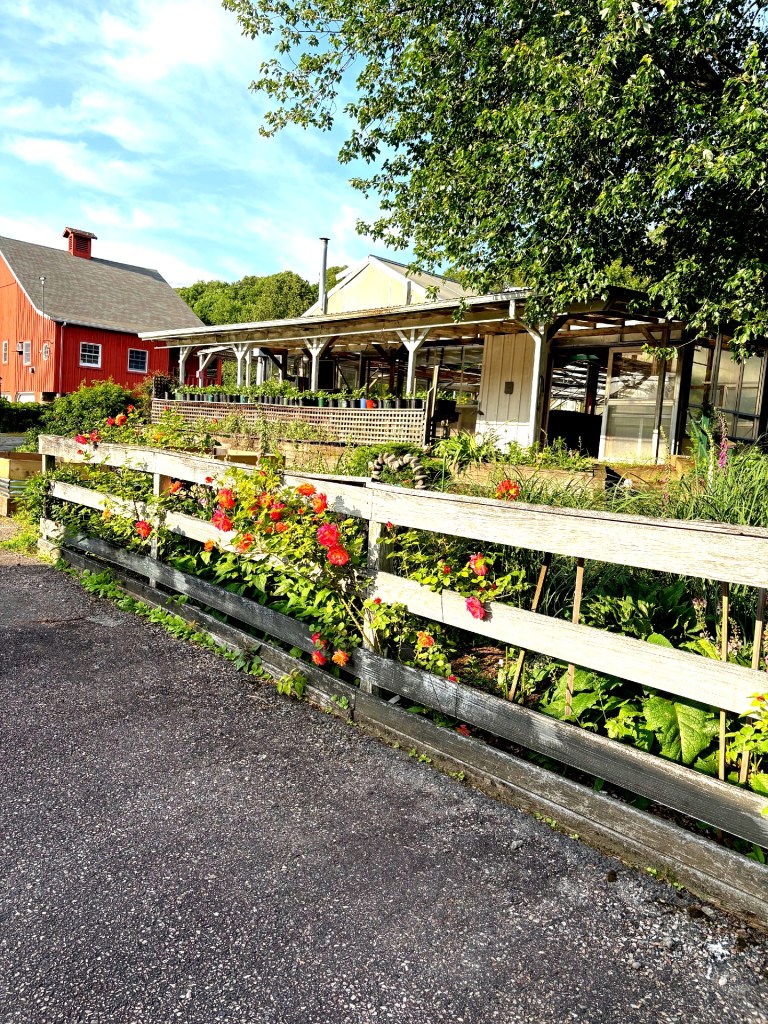
The focus isn’t on perfection — it’s on expression. On delight. On the slow and rewarding work of shaping a place that tells our story.

At times, I have to remind myself that beauty doesn’t need to be pristine to be profound. Loose threads, imperfect lines, mismatched furniture — these don’t diminish the story; they enrich it. And with that reminder comes a liberating truth: letting go of what no longer serves isn’t about erasing the past — it’s about welcoming the present with open hands.

And oh, what a present this is.

So here’s to projects both literal and internal: the kind that involve tools and tile, and the kind that ask me to grow and let go. Begun with excitement and sustained with intention. To landscapes that change with the seasons and rooms that hold memories instead of judgments. To the peace that comes when I stop trying to perform and please, and start simply being and becoming.

Not perfect. Not finished. A work in progress, enjoying the process.

Making my mark

Estimated reading time: 4 minutes

It’s a rainy March day in Laguna Beach where we are spending the winter, and therefore a perfect day to ruminate about what’s next.

We accumulate, build upon, and hone our skill sets as we go through life, hopefully to greater satisfaction with our accomplishments. After retiring, some people are able or prefer to continue to use these skills via part-time work, contract work, or mentoring. Others veer as far away from their working personas as possible, choosing to take up hobbies or passions they had put on hold for the years they were in the working world.

My working world was in hospitality: welcoming guests, creating memorable meals and curating a positive experience. A lot of this remains with me as I try to figure out who I am, and who I will be, in my next chapter.

The aspects of my previous careers (advertising, marketing, writing, innkeeping) that I most enjoyed all center around creativity, so as a rough draft attempt at self-definition, I’ll say I am now the creative director of my life. And with a lifelong love of home design and décor, I’m currently focusing my creative direction on the nesting of our home.

One thing I realized was that twenty years of creating a warm, comforting space that isn’t wholly my own has made me become very territorial about our new house. The areas I shared with guests of the B&B – the downstairs living and dining room, the guest bathroom, and the mudroom – all reflected our personality and taste, and I was happy in them. The guest rooms, by definition, weren’t mine, though in our early years, I had named and themed their decoration for the estates Chris ran when he was a butler, which was tremendous fun for me. This included things like a framed picture of Chris in situ, artwork and a small collection of books in each room related to the area portrayed, and something “butler-y”—for example, Oak Knoll, named for the estate on the Gold Coast of Long Island is also the name of an Oregon-based wine producer, and so in that room I dressed a bottle in one of those wine tuxedos and rooted a philodendron in it. Eton Court, my English-themed room, featured a series of photos of London pubs, a small bookshelf containing a complete hardcover set of Agatha Christie mysteries, and a pub towel as a dresser scarf.

While I loved these touches, about seven years into our tenure I caved to industry pressure at an innkeeper’s conference that stressed that even those of us who ran smaller professional bed and breakfasts needed to be reminded that our guests did not want to feel like they were invading our HOME. Recognizing the truth here, I sighed and removed the personal photographs, books, and tchotchkes. Over the years, the guest rooms became less and less themed, though I refused to change the artwork. They had clean lines and neutral colors, and the guests seemed to like them. Truthfully, I lost much of my interest in them.

I won’t do that again.

sculpture of an octopus with flowers

I’ve said for most of my life that Laguna Beach, with its artsy history and vibe, is my spiritual home, and in truth, for years I believed we’d retire here. The homes are fairly small, close-set, and vary wildly in architecture – not a single tract home–and every neighborhood has a mix of single-family homes and apartment buildings. Art abounds in public spaces everywhere, from bus benches to murals to sculptures tucked into corners of the parks. Three huge art fairs dominate the summer scene. LCAD, the Laguna College of Art and Design, is increasing its presence each year. And the town is set on a gorgeous stretch of the Pacific Ocean.

But for so many reasons, our little (?) house on the pond is a much better fit for us both. And one of the things I love about it visually was that it was unlike any other house I’d seen; what my friend Alison, with degrees in historic architecture, described as “vernacular farmhouse.” In short, it is a one-off, Laguna-esque house that predates Laguna’s founding by over a quarter of a century. (Did I mention I like old houses?) One that I could make my mark ALL over.

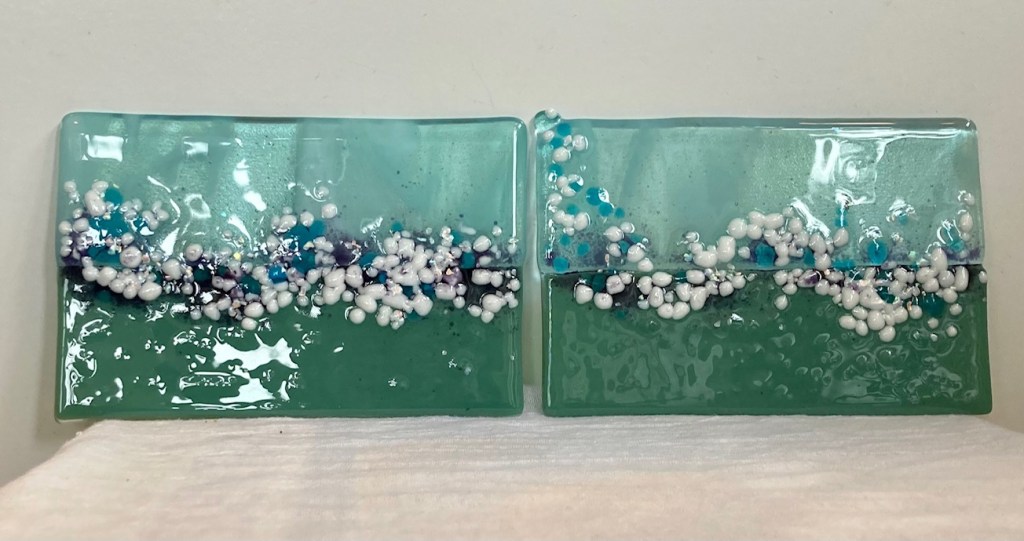
Back to art, one of the things I most love to do while wintering in Laguna is to take fused glass classes from my mentor Maggie Spencer. The fruits of my efforts over the many years I’ve been doing this are scattered all over our Connecticut house, though mostly displayed on shelves in the dining room. One of the projects I tackled this year was designing vanity backsplash tiles for our downstairs bathroom. It’ll likely be a while before I can install them as we plan to remodel the bath first, but I’m excited the tiles will make it unique; nothing anyone else has.

fused glass in shades of blue and light green

That seems to be the theme running through my head: What can I do to make our place uniquely ours? What can I do to make this project uniquely mine? What kind of story is uniquely mine to tell?

What can I do to make my LIFE uniquely mine?

When will I recognize that it already is?

“It’s only money”

Estimated Reading Time: 4 minutes

We’re back in Laguna Beach for the winter; a lease we signed before we bought our Connecticut house. We’ve been walking daily from Main Beach up via Heisler Park through North Laguna, where we’ve always rented before this year. The neighborhood is a mix of very expensive oceanfront houses and beachy multi-unit apartments; some of the latter have been slowly morphing into stylish modern apartment units that were never conceived as homes.  The proliferation of out-of-state license plates underscores the presence of short-term vacation rentals at significantly higher monthly rates than a year-round lease would bring.

And then there are the cars. You could watch the parade of luxury vehicles on Pacific Coast Highway all day long.

Now, this is Southern California, and car culture is a real thing here. The closest Cars and Coffee Saturday meetup is heavy on Porsches, vintage Jaguars, and Aston Martins (there’s a dealership in the same parking lot). If it’s important to someone to drive a $250K vehicle (looking at you, McLaren owner), then that’s their choice. It’s only money, we say.

But money is something very front and center to you (okay, to me) when you retire. And it’s not like we haven’t faced this epiphany before. You’d think, given our respective and combined backgrounds, we’d be old hats at this.

I still recall the first time Chris fell to earth. It was shortly after he retired from butlerhood and he was planning a new driveway for our home in East Hampton. He wanted tarmac with a Belgian block apron and edging the entire length of the drive. And then he did the math and got a shock. Not so much at what it would cost – he was familiar with the relative price through several projects he’d done for past employers– but at the sudden realization that we didn’t have that sort of ready cash for such a project. For some twenty years in households of the wealthy who bought what they want when they wanted it, it had been his job to procure it. So while he assiduously shopped to get the best price, the check he wrote wasn’t his. Now it was. And WE couldn’t write that check, not without some planning, saving, and budgeting.

Lesson learned: No immediate gratification anymore.

It was a lesson that we somewhat forgot a few years later when we bought A Butler’s Manor. We were running a high-end luxury bed and breakfast, ergo the property had to look and feel great all the time. Nothing worn or tired. Shabby chic was not our style. Linens, towels, beds, guest bathrooms: crisp, ultra clean, fresh, comfortable–always. Something that broke (the air conditioner, a toilet seat, a cable box, the internet, a beach chair) needed to be repaired or replaced immediately because we faced the loss of income (and loss of face?) for every day something was out of service.  This resulted in somewhat of a “no budget” world. We still had to consider how to pay for the big things, but if it was in the guest rooms, the common areas, or the garden, it was definitely going to get done sooner rather than later. I realize in hindsight how much this fueled a constant undercurrent of anxiety in me. We had to be perfect. Write the check.

But – crucially – the B&B was our livelihood. So while we never collected a salary, we had the advantage of living in this beautiful place, and we plowed pretty much all of the profits right back into the property. Thus we never were serious about a budget for maintenance, upkeep or upgrades because it wasn’t an option to leave things undone, unrepaired, or undecorated. (Our quarters and backstage areas? Not priority. It took us eight years to bite the bullet on renovating our bedroom to include an ensuite bath and private sitting areas.)

Now that neither we nor our house generate an income, I need to remember that long ago lesson once learned about immediate gratification, which is frustrating — and scary. I realize my fearful reaction is in great part due to the changes that have come about this year as a result of retirement, and that we are still transitioning, mentally and emotionally, to not being breadwinners. I need to reset my mindset around “It’s only money.” because now it’s very definitely about our money.

It has taken us close to a year to get a budget on paper. Partly because we needed the information (what does electricity cost here in the summer? winter?), but mostly because I have resisted being pinned down to numbers, resisted the idea that now we need to evaluate when or whether it’s feasible to make a large purchase such as landscaping or an irrigation system or a new truck or a kitchen remodel, and what that means for the monthly budget of buying much smaller things, like window treatments or shelving.

And, as we sigh at the meticulously restored classic cars with the customized paint jobs and the polished engine blocks, we remind ourselves of the blessings we have, the choices we’ve made, and why owning a Mercedes Benz SL Roadster right now just isn’t one of them.

Processing…
Success! You're on the list.